Cabbages and Kings

A diary by the authors of the Louis Kincaid series

My Photo
Name: PJ Parrish
Location: United States

I am writer. It is the only thing I do reasonably well. I wanted to be a Rockette but my legs are too short and I can't do the splits.

Monday, October 29, 2007

Halloweenie

Scariest book I ever read: "The Haunting of Hill House" by Shirley Jackson


Scariest short story I ever read: "Turn of the Screw" by Henry James


Scariest movie I saw as an adult: "The Exorcist"


Scariest movie I saw as a kid: "The Blob"


Scariest moment I've ever had: sharing a panel with Charlotte Curtis, op-ed editor of the New York Times when I was only 21 years old.

Scariest thing I've ever done: Chairing the Edgars last year.

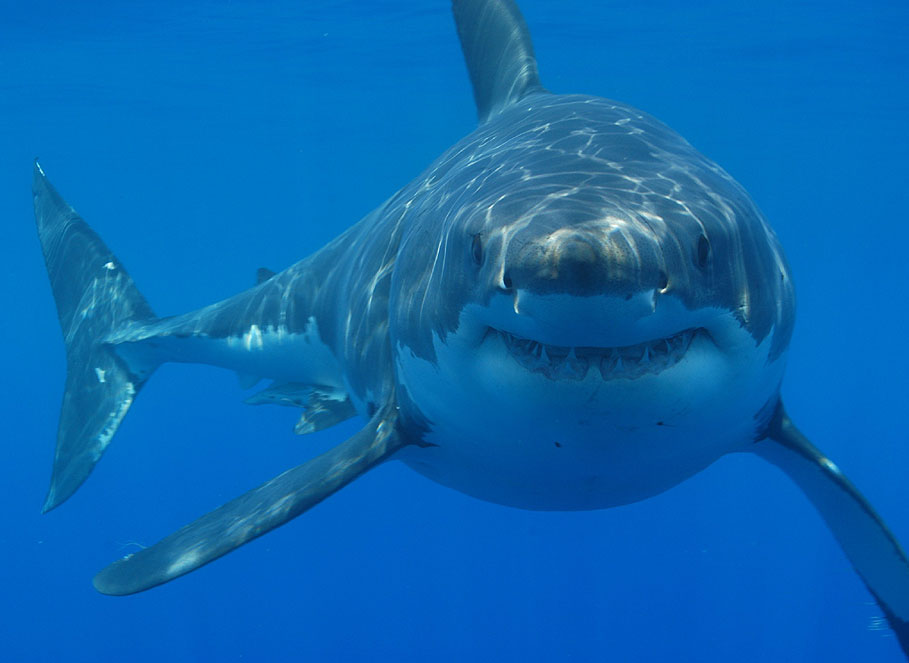
Scariest thing I ever saw: a shark while I was snorkling.


Scariest thing I want to do before I die: go skydiving.


And finally, the scariest thing you will see today:


That's me with my husband Daniel and dog Bailey going out to trick or treat. What's your scariest list? Happy halloween!


How to write a thriller


Bond: Do you expect me to talk?
Goldfinger: No, Mr. Bond, I expect you to die.


Isn't that the best two lines of dialogue you've ever read?

I have been thinking about James Bond -- and his creator Ian Fleming -- quite a bit lately. Part of this springs from the fact that I am supposed to be a "thriller" writer yet I don't really know what that is supposed to mean. Especially today when the genres are criss-crossing each other faster than panicked chickens.

Two years ago, I was a judge for the International Thriller Writers first contest and I confess that our First Novel committee had some trouble figuring out which books qualified as thrillers and which did not. The old rules don't really apply anymore what with the rich ingredients many writers are throwing into the pot these days.

You just can't limit the definition (as some still insist on doing) to the hoary formula: A common man thrust into extraordinary circumstances in (insert exotic locale here) faces down a (insert monster or menace here) with the help of the beautiful and mysterious (insert female stereotype here) to save (insert organization, country or world here) before the clock ticks down to the final second.

So what IS a thriller?

Beats me. And we won the ITW Thriller Award this past summer. But since I am still trying to wrap my brain around this question, I thought I'd go back to one of the originals -- Ian Fleming.

I had heard about an article Fleming wrote about thrillers and had been trying to find it for some time. Damned if I didn't finally stumble on it today as I was searching the web for something else. Kind of like finding your glasses when you're looking for your wallet.

So, I am going to go back to writing my chapter now, since the book is due in three days. But I hope you'll enjoy this article as much as I did. Fleming wrote it in 1962. There's some really good advice in here that still makes sense to me today.

HOW TO WRITE A THRILLER
By Ian Fleming

People often ask me, "How do you manage to think of that? What an extraordinary (or sometimes extraordinarily dirty) mind you must have." I certainly have got vivid powers of imagination, but I don't think there is anything very odd about that.

We are all fed fairy stories and adventure stories and ghost stories for the first 20 years of our lives, and the only difference between me and perhaps you is that my imagination earns me money. But, to revert to my first book, Casino Royale, there are strong incidents in the book which are all based on fact. I extracted them
from my wartime memories of the Naval Intelligence Division of the Admiralty, dolled them up, attached a hero, a villain and a heroine, and there was the book.

The first was the attempt on Bond's life outside the Hotel Splendide. SMERSH had given two Bulgarian assassins box camera cases to hang over their shoulders. One was of red leather and the other one blue. SMERSH told the Bulgarians that the red one con-tained a bomb and the blue one a powerful smoke screen, under cover of which they could escape.

One was to throw the red bomb and the other was then to press the button on the blue case. But the Bulgars mistrusted the plan and decided to press the button on the blue case and envelop themselves in the smoke screen before throwing the bomb. In fact, the blue case also contained a bomb powerful enough to blow both the Bulgars to fragments and remove all evidence which might point to SMERSH.

Farfetched, you might say. In fact, this was the method used in the Russian attempt on Von Papen's life in Ankara in the middle of the war. On that occasion the assassins were also Bulgarians and they were blown to nothing while Von Papen and his wife, walking from their house to the embassy; were only bruised by the blast.

So you see the line between fact and fantasy is a very narrow one. I think I could trace most of the central incidents in my books to some real happenings.

We thus come to the final and supreme hurdle in the writing of a thriller. You must know thrilling things before you can write about them. Imagination alone isn't enough, but stories you hear from friends or read in the papers can be built up by a fertile imagination and a certain amount of research and documentation into incidents that will also ring true in fiction.

Having assimilated all this encouraging advice, your heart will nevertheless quail at the physical effort involved in writing even a thriller. I warmly sympathise with you. I too, am lazy My heart sinks when I contemplate the two or three hundred virgin sheets of foolscap I have to besmirch with more or less well chosen words in order to produce a 60,000 word book.

One of the essentials is to create a vacuum in my life which can only be satisfactorily filled by some form of creative work - whether it be writing, painting, sculpting, composing or just building a boat - I was about to get married - a prospect which filled me with terror and mental fidget. To give my hands something to do, and as an antibody to my qualms about the marriage state after 43 years as a bachelor, I decided one day to damned well sit down and write a book.

The therapy was successful. And while I still do a certain amount of writing in the midst of my London Life, it is on my annual visits to Jamaica that all my books have been written.

But, failing a hideaway such as I possess, I can recommend hotel bedrooms as far removed from your usual "life" as possible. Your anonymity in these drab surroundings and your lack of friends and distractions will create a vacuum which should force you into a writing mood and, if your pocket is shallow, into a mood which will also make you write fast and with application. I do it all on the
typewriter, using six fingers. The act of typing is far less exhausting than the act of writing, and you end up with a more or less clean manuscript The next essential is to keep strictly to a routine.

I write for about three hours in the morning - from about 9:30 till 12:30and I do another hour's work between six and seven in the evening. At the end of this I reward myself by numbering the pages and putting them away in a spring-back folder. The whole of this four hours of daily work is devoted to writing narrative.

I never correct anything and I never go back to what I have written, except to the foot of the last page to see where I have got to. If you once look back, you are lost. How could you have written this drivel? How could you have used "terrible" six times on one page? And so forth. If you interrupt the writing of fast narrative with too much introspection and self-criticism, you will be lucky if you write 500
words a day and you will be disgusted with them into the bargain. By following my formula, you write 2,000 words a day and you aren't disgusted with them until the book is finished, which will be in about six weeks.

I don't even pause from writing to choose the right word or to verify spelling or a fact. All this can be done when your book is finished.

When my book is completed I spend about a week going through it and correcting the most glaring errors and rewriting passages. I then have it properly typed with chapter headings and all the rest of the trimmings. I then go through it again, have the worst pages retyped and send it off to my publisher.

They are a sharp-eyed bunch at Jonathan Cape and, apart from commenting on the book as a whole, they make detailed suggestions which I either embody or discard. Then the final typescript goes to the printer and in due course the galley or page proofs are there and you can go over them with a fresh eye. Then the book is published and you start getting letters from people saying that Vent Vert is made by Balmain and not by Dior, that the Orient Express has vacuum and not hydraulic brakes, and that you have mousseline sauce and not Bearnaise with asparagus.

Such mistakes are really nobody's fault except the author's, and they make him blush furiously when he sees them in print. But the majority of the public does not mind them or, worse, does not even notice them, and it is a dig at the author's vanity to realise how quickly the reader's eye skips across the words which it has taken him so many months to try to arrange in the right sequence.

But what, after all these labours, are the rewards of writing and, in my case, of writing thrillers?

First of all, they are financial. You don't make a great deal of money from royalties and translation rights and so forth and, unless you are very industrious and successful, you could only just about live on these profits, but if you sell the serial rights and the film rights, you do very well. Above all, being a successful writer is a good life. You don't have to work at it all the time and you carry your office around in your head. And you are far more aware of the world around
you.

Writing makes you more alive to your surroundings and, since the main ingredient of living, though you might not think so to look at most human beings, is to be alive, this is quite a worthwhile by-product of writing.

Monday, October 22, 2007

The case of the missing bestseller

This bestseller list thing just gets curiouser and curiouser. Recently, I blogged about how weird this business of compiling bestseller lists has become.

Folks, it just got stranger than fiction.

Seems the "public editor" (aka ombudsman or in-house maiden aunt scolder) of the New York Times Clark Hoyt has some issues with the way his newspaper compiles its vaunted bestseller lists. (I will recount the salient points here in case you can't access the Times online. And heads up to Galley Cat, where I found this link.)

First, Hoyt tells us that the NYT list is "powerful and mysterious" and quotes Larry Kirshbaum of Time-Warner as saying it is "the gold standard." Then, rather disingenuously, he goes on to say the list is "not a completely accurate barometer of what the reading public is buying, and it has generated controversy from time to time." This is common info in the publishing world -- even among authors. A Times' columnist is just now finding this out?

The latest brush-up is over Elie Wiesel's memoir "Night." The book has always sold well, and due to a new recent translation, it was enjoying a revival. At one point last year, it was simultaneously No. 1 on the nonfiction paperback list, No. 3 on the same list in its original edition and No. 7 on the hardcover list.

But last month, when the the Times introduced its expanded bestseller lists (breaking paperback into Trade and Mass Market) “Night” disappeared. This, after after a run of 80 weeks, after hitting No. 9 on the paperback list the week before.

“People called me to ask what happened, and I really couldn’t explain it,” Wiesel is quoted as saying. He said he still can’t, even after an explanation from The Times.

What happened? PE Clark Hoyt (as opposed to PI?) got on the case.

He unearthed lots of interesting side stuff:

The Book Review editor, Sam Tanenhaus, has nothing to do with compiling the list that appears in his section. It is done by the Times news surveys department.

The list isn’t tabulated from paper questionnaires sent to booksellers; it’s entirely computerized. The roster of outlets surveyed is not adjusted only once every five years; it changes constantly.

And it's a misconception that the Times surveys booksellers only about titles determined by publishers’ shipments thereby giving "sleeper" books no chance. Instead, some companies dump all of their book sales to The Times, while others fill out an online form based on the previous week’s best sellers and including space for unlisted books that have sold well.

And: The Wall Street Journal and USA Today name the booksellers they survey. The Times keeps its reporting booksellers secret.

Re: that last one, Hoyt tries to get an explanation from Deborah Hofmann, who is named as the "editor of the bestseller list." Sez Hofmann: "We are aware of certain publishers and certain authors, and we watch those publishers and authors for certain trends. People do try to game the list.”

Hoyt seems mildly perturbed by this, but again, the idea that someone might try to get on the list by bulk-buying at certain stores is pretty common knowledge in our business. I have heard my fellow authors admit their strategy is to do signings only at bookstores they know report to the Times. Such is the deseperation behind needing to get on that "gold standard" list.

But readers don't know any of this. Many of them depend (rightly or wrongly) on the NYT list to cull their book purchases. I've seen enough readers in B&Ns holding the NYT list to know this. The lists are posted at B&N, for heaven's sake. And readers are supposed to KNOW the lists aren't really reflective of what's actually selling?

Oh, but they would. If only they paid attention.

See, if you look hard on the NYT list, you'll see these little dagger symbols next to some titles. This dagger means, the small type below the list tell us, that "some bookstores report receiving bulk orders." Which means, someone might be "gaming" the book but it's on the list anyway so you readers figure it out on your own whether it's really a bestseller or not.

But back to Wiesel's book "Night." What DID happen to his disappearing bestseller?

Well, again, let's go to the fine print below the list, where next to the dagger clause, we find this phrase: "Perennial bestsellers are not actively tracked."

That means, acording to PE Hoyt, that someone arbitrarily decides a book is a "classic" -- or in the words of a Times editor "evergreen." And that book is taken off the list. No matter how many copies it is selling in relation to "The Kite Runner." You can add "evergreens" like "To Kill a Mockingbird" -- which also doesn't appear on the NYT list, even though it regularly outsells most the books that appear each week.

Why banish a book just because it has, ahem, such great legs? Hoyt quotes NYT editor Hofman again: "The Times wants a list that’s lively and churns and affords new authors the opportunity to be recorded.”

Or, to look at things more crassly: The Times wants its slots open to books that can generate advertising revenue. It's a lot easier to tap Viking for an ad in support of Garrison Keillor's "Pontoon" than it is to hit on Back Bay Books to tout "Catcher In the Rye." Even though the latter was recently No. 19 on the USA Today bestseller list, which reflects actual sales and doesn't ban "evergreens."

In a message to Wiesel’s publisher, Hofmann called “Night” a modern classic and said most of its sales are now driven by student reading lists. Said Hofman: “The editorial spirit of the list is to track the sales of new books. We simply cannot track such books [as Wiesel's] indefinitely.”

So, is Elie Wiesel a "bestselling author" or not?

According to USA Today he is. "Night" is at No. 129 this week, nine spots below “The Official SAT Study Guide.” (the USA Today list lumps all books, regardless of format or content, into one giant list).

Wiesel is nowhere to be seen on the New York Times list.

But hey, he's still got a chance. Hofman says the Times is considering adding YET ANOTHER bestseller list. It will be called the "Classics List."


Tuesday, October 16, 2007

Yo! Muse!

O Muses, O high genius, aid me now!
O memory that engraved the things I saw,
Here shall your worth be manifest to all!

-- Dante, The Divine Comedy

If you are like me, you take your inspiration wherever -- and whenever -- you can get it.

Let's face it. Writing is not easy. (Warning: tortured metaphor ahead).

Writing is like sailing a Hobie Cat in the ocean in the middle of a squall. I know because I used to sail Hobies during my first marriage, which is probably why it didn't last. The marriage, not the Hobie. The day is always sunny when you launch your Hobie from the beach and you're all aglow with hardy-har-har-endorphins. So it is when you sit down and type CHAPTER ONE.

Then the storm hits and there you are, hanging onto a 16-foot piece of fiberglas and vinyl, hoping lightening doesn't hit the mast and fry your ass. You are out there alone in the storm, out of sight of land, riding the waves and the troughs, hoping you can make it home. You might even throw up. This is usually around CHAPTER TWENTY for me.

End of metaphor.

I often wonder what keeps writers writing. Tyranny of the contract deadline? Blind faith? The idea that if you don't you might have to do real physical labor for a living, like paint houses? All of those work for me. But sometimes, the only thing that keeps me going is a visit from my muse.

Now, let's get one thing clear here. I don't believe in WAITING for a muse to show up. I get really impatient with writers who claim they can't write until they feel inspired because frankly, 90 percent of this gig is writing DESPITE the fact your brain is as dry as Waffle House toast. (or as soggy, depending on which Waffle House you frequent. The last one I was in was off the Valdosta Ga. I-95 exit in 1976 and the toast was so dry it stands today as my singular metaphor for stagnant creativity).

But I do believe that sometimes -- usually when your brain is preoccupied with other stuff -- something creeps into the cortex and quietly hands you a gift. And these little gifts are what get you through.

There are nine muses in mythology, who were supposed to be the origin of all artistic inspiration. They were Calliope, Clio, Erato, Euterpe, Melpomene, Polymnia, Terpsichore, Urania and Thalia. (I always thought it was cool that Dobie Gillis's unobtainable ideal woman was named Thalia -- the muse of comedy). The muses ruled over such things as dance, music, history, even astronomy. No muses for crime writers, unless you count Calliope for epic poetry but I think James Lee Burke has her on permanent retainer.

I don't have just one muse. I've figured out I have a couple who specialize in particular parts of my writing. And they never come around when I am at the computer. Never get a whiff of them when I am actually in writing mode itself. They are like cats. They only come around on their own terms.

First, there's my dialogue muse. I call him J.J. because he sounds like Burt Lancaster's gossip columnist J.J. Hunsecker in "The Sweet Smell of Success." Always chewing at my ear saying oily things like, "I'd hate to take a bite out of you, you're a cookie full of arsenic." J.J. comes to visit me only when I am jogging. Never on the threadmill, mind you, only outdoors. J.J. makes my skin crawl but man, can this guy write dialogue.

Then there's my narrative muse. I call him Cat Man because he slips in on silent paws, sings in a fey whisper and only visits me just as morning has broken. Cat Man comes around about dawn, just as I am waking up as if from death itself. See, my husband's insomnia means we sleep with blackout drapes, a white-noise machine and the A/C turned so cold the bedroom is like a crypt. So when I wake up, it is with a gauzy gray aureole rimming the drapes, icy air swirling around my nose and a soft swoooshing in my ears. And there is Cat Man, spinning a long segment of sensual exposition that salvages my stagnant plot. I have learned to lay there, very still, until he is done with his song, because if I get up and try to write it down, he vanishes. Praise for the singing, praise for the morning, praise of the springing, fresh from the word.

I have a third muse. Her name is Flo because her voice sounds like that waitress who worked in Mel's Diner on the old "Alice" sitcom. You know, like the door of a rusted Gremlin. Flo is my muse of getting real. Her Greek name is Nike (the goddess of victory) and her slogan is "Just Do It." Because whenever those other two guys fail me, whenever they don't show up, Flo is there. She is the muse who knows that the only way I am going to get the book finished is through plain old hard work. Like Nike, Flo has wings. They symbolize the fleeting nature of victory. Or, as Flo often tell me, "Honey, if you don't get off your ass and just write the damn, you're going to lose your contract and you'll have to paint houses for a living."

I'd be lost without her. Who keeps you going?